Best Microphone for AI Dictation in 2026
By FreqDeck · 10 min read · Updated September 2026
If you use Whisper, Wispr Flow, Willow Voice, or any AI transcription tool, the microphone matters more than almost anything else in your setup. AI transcription models are trained on clean speech. Feed them room noise, reverb, and preamp hiss and you will lose words constantly. Feed them a clean cardioid signal from a good microphone positioned six to twelve inches from your mouth and accuracy climbs fast. This guide covers the best microphones for AI dictation in 2026, from the MXL AC-44 budget pick at $55 to the Rode PodMic USB at $199 and the professional Philips SpeechMike Premium Air at $395. The recommendation at the top stays the same at every read: the Rode PodMic USB wins on Whisper accuracy in a typical home office because its tight cardioid dynamic capsule rejects the noise the model needs to filter out.
Quick answer
The Rode PodMic USB is the best microphone for AI dictation in 2026. Its tight cardioid dynamic pattern rejects room noise more aggressively than most mics at this price, giving Whisper and Wispr Flow a cleaner signal with fewer missed words. The Rode NT-USB Mini is the best sub-$100 option for quiet offices.
This guide contains affiliate links. FreqDeck may earn a commission at no cost to you.
Why the microphone matters so much for AI transcription
A clean, close-positioned microphone is what determines real-world dictation accuracy, not the AI model. OpenAI Whisper reaches 97.93 percent word accuracy on the LibriSpeech benchmark per MLCommons, but that number assumes clean input; room noise and keyboard clatter push real sessions well below it.
Every AI transcription model, whether you are using OpenAI Whisper locally, Wispr Flow, Willow Voice, or a cloud dictation API, takes a raw audio stream as input and produces text. The model has been trained on human speech at a specific signal-to-noise ratio. When background noise, keyboard clatter, HVAC rumble, or low-quality preamp hiss raises the noise floor of your recording, the model spends more of its capacity filtering that signal rather than decoding phonemes. The result is dropped words, wrong words, and sentences that require correction.
The fix is upstream: give the model a cleaner signal. A directional cardioid microphone positioned close to your mouth captures more voice and less room. A dynamic capsule rejects high-frequency room detail that a condenser would pick up. A boom arm keeps the distance consistent. These hardware choices directly affect the word-error rate you see in your dictation session.
Developers who have switched from laptop microphones or built-in webcam mics to dedicated cardioid desks mics consistently report the same thing: fewer interruptions to correct transcription errors, longer flow states while voice coding, and significantly better performance from tools like the Rode PodMic USB or even a budget dynamic like the ATR2100x.
Dynamic versus condenser for AI dictation
In most home offices, a dynamic microphone beats a condenser for AI dictation because it rejects far more room noise. The Rode PodMic USB ($199, dynamic) is the top pick for typical rooms; the Rode NT-USB Mini ($99, condenser) only matches it in a quiet, treated space.
The microphone type decision is the most important one you will make for dictation. Dynamic microphones like the Rode PodMic USB and the Audio-Technica ATR2100x-USB use a moving-coil capsule that is physically less sensitive to sounds that do not directly hit the diaphragm. This means they reject room reflections, keyboard noise, and environmental sounds more aggressively. In a typical home office with hard walls and no acoustic treatment, a dynamic mic almost always produces better Whisper accuracy than a condenser.
Condenser microphones like the Rode NT-USB Mini, the Blue Yeti X, and the Elgato Wave:3 use an electrically charged membrane that is more sensitive across a wider frequency range. They sound more detailed and nuanced on recordings, which is why podcasters and musicians prefer them. But that sensitivity is also why they pick up more room noise. In a well-treated room or a quiet home office, a condenser can equal or exceed a dynamic for voice clarity. In a typical room with reflective surfaces, a dynamic wins for dictation.
The recommendation for most developers is a dynamic microphone, specifically the Rode PodMic USB as the primary pick. If you are in a very quiet office and you want more audio detail for calls as well as dictation, the Rode NT-USB Mini is an excellent condenser at under $100.

Rode PodMic USB
A broadcast-grade dynamic mic with both USB-C and XLR outputs, tight cardioid pattern, and a built-in headphone output. The top Whisper and Wispr Flow recommendation in developer communities.

Rode NT-USB Mini
A compact studio condenser with a tight cardioid pattern, USB-C output, and an integrated pop filter built into the capsule housing. Excellent voice clarity for Whisper and voice-coding workflows.

Audio-Technica ATR2100x-USB
A dynamic cardioid mic with both USB-C and XLR outputs, clean preamp, and a warm sound character. A long-running developer favorite for AI dictation on a tight budget.
The Rode PodMic USB: top pick for AI dictation
The Rode PodMic USB is our top recommendation for AI dictation and voice coding. It is a broadcast-grade dynamic microphone with both USB-C and XLR outputs, a built-in headphone jack for zero-latency monitoring, and a tight supercardioid-leaning polar pattern that rejects off-axis sounds aggressively. Developers using Wispr Flow in noisy home offices and remote coding environments consistently report higher word accuracy with the PodMic USB than with condenser alternatives at the same price.
At $199 the Rode PodMic USB is not the cheapest option in this guide, but it represents the best balance of noise rejection, build quality, and upgrade path. The XLR output means you can use it with a dedicated audio interface when you are ready to upgrade your audio chain. The USB-C output means you can plug it directly into a MacBook or Windows laptop today. The Rode PSA1+ boom arm is the natural companion, handling the weight of the PodMic USB without drift and keeping your desk clean with internal cable routing. Both route to Rode direct at 15% commission, making this the recommended pairing for the full setup.
If you are specifically asking which mic gives the best Whisper and Wispr Flow accuracy in a real home office with no acoustic treatment, the PodMic USB is our answer. The tight polar pattern is the reason.
Rode PodMic USB
A broadcast-grade dynamic mic with both USB-C and XLR outputs, tight cardioid pattern, and a built-in headphone output. The top Whisper and Wispr Flow recommendation in developer communities.
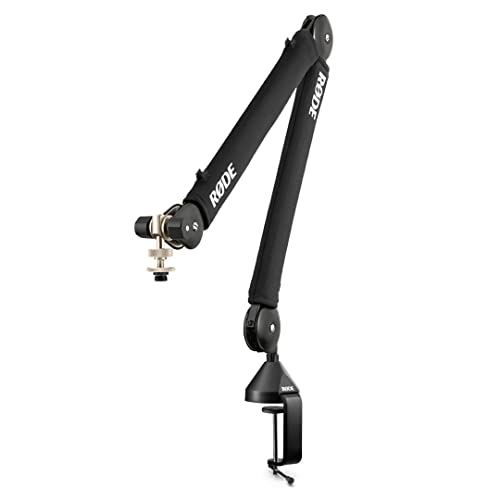
Rode PSA1+ Professional Swivel Mount Studio Arm
The professional broadcast studio arm that handles heavier mics like the Rode PodMic USB without sagging, with full internal cable routing and smooth friction-controlled movement.
Best microphones under $100 for AI dictation
The best sub-$100 microphone for AI dictation depends on your room. In a quiet office or a room with some soft furnishings, the Rode NT-USB Mini is an excellent condenser at $99 with studio-grade clarity and a built-in pop filter. It also pairs naturally with the Rode SM6 shock mount and Rode PSA1+ arm, and it routes to Rode direct for the 15% commission. If you want to start small, the NT-USB Mini with the foam windscreen is an unbeatable value for clean AI dictation input.
In a noisier room or open plan, the Audio-Technica ATR2100x-USB at $79 is the better call. Its dynamic capsule provides significantly more background noise rejection than any condenser at a similar price, and the USB-C plus XLR output means it is future-proof. The FIFINE AM8 Dynamic USB Microphone at $57 is a capable budget dynamic with a built-in shock mount base, while the MXL AC-44 USB Microphone at $55 is the cheapest route to any dedicated microphone for Whisper dictation.
The one honest caveat on the MXL AC-44 is its omnidirectional pickup pattern. An omni mic captures sound from all directions equally, which means more room noise in the input and lower Whisper accuracy compared to a cardioid. For $55 it is still a step up from a laptop mic, but plan to replace it with a cardioid when you are ready to invest.
Rode NT-USB Mini
A compact studio condenser with a tight cardioid pattern, USB-C output, and an integrated pop filter built into the capsule housing. Excellent voice clarity for Whisper and voice-coding workflows.
Audio-Technica ATR2100x-USB
A dynamic cardioid mic with both USB-C and XLR outputs, clean preamp, and a warm sound character. A long-running developer favorite for AI dictation on a tight budget.

FIFINE AM8 Dynamic USB Microphone
A dynamic cardioid USB-C microphone with a built-in shock mount base, touch mute, and a backlit ring. Competitive noise rejection for under $80.

MXL AC-44 USB Microphone
The mic that gets the most mentions on developer blogs covering AI dictation on a budget. Omnidirectional cardioid pickup with a small desktop form factor and no arm required.
Dedicated dictation microphones: SpeechWare, Philips, and Nuance
If you are a legal or medical professional using Dragon NaturallySpeaking, Dragon Medical, or a similar formal speech recognition engine, the dictation-specific hardware is worth considering. The Philips SpeechMike Premium Air at $395 is a professional wireless dictation microphone with programmable workflow buttons, a USB receiver, and a pickup pattern tuned for the voice frequency range of dictation engines. The Nuance PowerMic 4 at $305 to $350 is the official companion hardware for Dragon and is specifically optimized for the Dragon acoustic model.
The SpeechWare TableMike 6-in-1 at $149 occupies a useful middle ground. It is purpose-built for speech recognition with a far-field pickup that works from up to 50 centimeters, so you do not need to stay rigidly close to the mic. It also works well with Whisper-based tools, making it a good choice for knowledge workers who want a desk-based dictation mic without a boom arm.
For most developers using Whisper, Wispr Flow, or Willow, the dedicated dictation mics are not the right call. The Rode PodMic USB and Rode NT-USB Mini perform as well or better for general voice coding workflows, and they also work for video calls and async recordings. The dedicated dictation hardware shines for formal transcription workflows where the specialized firmware is part of the point.

Philips SpeechMike Premium Air
A professional wireless dictation microphone with a SpeechExec workflow button panel, USB receiver, and a pickup pattern tuned for legal and medical speech recognition at full desktop working distance.

Nuance PowerMic 4
The standard issue dictation mic for Dragon Medical and Dragon Professional users, with a beamforming array, programmable buttons, and a USB-A plug-and-play design.
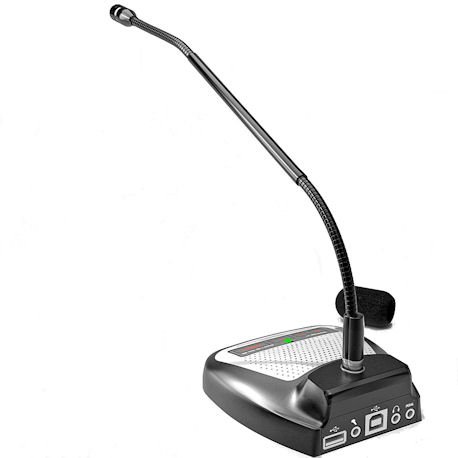
SpeechWare TableMike 6-in-1
A purpose-built desktop dictation microphone with a built-in pre-amp, USB, and a far-field pickup that works from up to 50 cm. Tuned specifically for Dragon NaturallySpeaking and Whisper-class transcription engines.
The role of a boom arm in AI dictation accuracy
A boom arm exists for consistency, not comfort: it locks mic distance at six to ten inches every session, which keeps transcription accuracy consistent too. The budget InnoGear Boom Arm runs $36; the Rode PSA1+ ($112) is the recommended arm for heavier mics like the Rode PodMic USB.
Position is the variable that most developers underestimate. A good microphone on a desk stand six inches from your mouth, repositioned every session, produces inconsistent results. The same microphone on a quality boom arm locked at a consistent position six to ten inches from your mouth produces reliably clean input every time you sit down to code.
Consistent mic positioning is as important as microphone choice for AI dictation accuracy. Whisper and similar models work better when the input matches the distance and angle they received during training calibration. A boom arm creates that consistency. It also keeps the mic off the desk surface, removing the transmission path for keyboard and mouse vibration. Pair the boom arm with an elastic shock mount and you have eliminated the two biggest sources of mechanical noise in a desk dictation setup.
The Rode PSA1+ Professional Swivel Mount Studio Arm is the top arm recommendation for heavier broadcast mics. For lighter condensers and budget setups, the Elgato Wave Mic Arm Low Profile is a solid mid-range option that keeps the mic out of the webcam frame, and the InnoGear Heavy Duty Microphone Boom Arm is a functional starter arm under $40.
Rode PSA1+ Professional Swivel Mount Studio Arm
The professional broadcast studio arm that handles heavier mics like the Rode PodMic USB without sagging, with full internal cable routing and smooth friction-controlled movement.

Elgato Wave Mic Arm Low Profile
A low-profile boom arm designed to keep the microphone in the lower field of view, out of the webcam frame, with internal cable routing and a desk clamp rated for lighter mics.

InnoGear Heavy Duty Microphone Boom Arm
A budget steel boom arm with dual-spring tension, desk clamp, and 5/8-inch thread. A reliable first boom arm for developers who need positioning without spending $100.
Featured in this guide
Rode PodMic USB
A broadcast-grade dynamic mic with both USB-C and XLR outputs, tight cardioid pattern, and a built-in headphone output. The top Whisper and Wispr Flow recommendation in developer communities.
Rode NT-USB Mini
A compact studio condenser with a tight cardioid pattern, USB-C output, and an integrated pop filter built into the capsule housing. Excellent voice clarity for Whisper and voice-coding workflows.
Audio-Technica ATR2100x-USB
A dynamic cardioid mic with both USB-C and XLR outputs, clean preamp, and a warm sound character. A long-running developer favorite for AI dictation on a tight budget.

Shure MV7+
An evolved USB/XLR dynamic mic with onboard touch controls, a backlit EQ panel, and Shure's ShurePlus MOTIV app for real-time voice processing. A credible alternative to the Rode PodMic USB for voice-coding setups.
Rode PSA1+ Professional Swivel Mount Studio Arm
The professional broadcast studio arm that handles heavier mics like the Rode PodMic USB without sagging, with full internal cable routing and smooth friction-controlled movement.

Aokeo Professional Microphone Pop Filter
A double-layer nylon mesh pop filter on a flexible gooseneck clamp that attaches to any boom arm and blocks plosive breath sounds without muffling high-frequency voice detail.
FAQ
Frequently asked questions
What is the best microphone for Whisper AI transcription?+
The Rode PodMic USB is the best microphone for Whisper in most home office environments. Its tight cardioid dynamic pattern rejects room noise aggressively, giving Whisper a clean voice signal with minimal background interference. The Rode NT-USB Mini is the best condenser option under $100 for quiet rooms. For formal dictation workflows, the SpeechWare TableMike has a far-field pickup tuned for speech recognition engines.
Does a better microphone actually improve AI dictation accuracy?+
Yes, measurably. AI transcription models like Whisper are trained on clean speech at a specific signal-to-noise ratio. A noisy input, from a laptop mic, an omnidirectional desk mic, or a condenser picking up room reflections, forces the model to use capacity filtering signal instead of decoding words. A directional cardioid microphone positioned 6 to 10 inches from your mouth reduces that noise floor and raises word-accuracy rates in most setups.
Can I use any USB microphone for Wispr Flow or Willow Voice?+
Yes, any USB microphone appears as an audio input device to Wispr Flow, Willow Voice, or any Whisper-based dictation tool. The question is input quality. A laptop microphone or an omnidirectional desk mic works, but a directional cardioid positioned close to your mouth produces significantly more accurate transcription output. You do not need specialized hardware, but a cardioid pickup pattern makes a real difference.
Should I use a USB microphone or an XLR microphone with an audio interface for AI dictation?+
USB is the simpler and usually better choice for most developers. A quality USB microphone like the Rode PodMic USB or the ATR2100x gives you clean preamp sound, a direct computer connection, and no extra hardware. An XLR microphone with the Focusrite Scarlett Solo or Rode AI-1 makes sense if you already own a good XLR mic or if you want maximum preamp control. For most voice coding setups, USB is the right starting point.