Whisper Accuracy Mic Test: What Actually Matters
By FreqDeck · 8 min read · Updated September 2026
OpenAI Whisper and the tools built on it, including superwhisper, Wispr Flow, Willow Voice, and a growing number of local Whisper implementations, all share the same acoustic properties they respond to. This guide is about what actually changes Whisper accuracy with a microphone and what does not. The short version: polar pattern and noise floor matter. Frequency response, sample rate, and bit depth above a baseline threshold do not. The Rode PodMic USB is the recommendation because it optimizes the things that matter. Everything else in this guide explains why.
Quick answer
For Whisper and Whisper-based transcription tools, the microphone properties that improve accuracy are cardioid polar pattern (less room noise in the signal), low self-noise floor (cleaner signal at low speaking volumes), and consistent close-mic placement via a boom arm. Frequency response above 8 kHz and sample rates above 16 kHz have minimal effect on Whisper accuracy.
This guide contains affiliate links. FreqDeck may earn a commission at no cost to you.
What Whisper actually processes
OpenAI Whisper converts audio to a mel spectrogram at 80 mel filter banks, sampled at 16 kHz, before passing it to the transformer model. This means that audio above 8 kHz contributes very little to Whisper transcription output. The model was trained on audio in this frequency range and processes the spectral pattern of vowels and consonants in the human voice, which lives primarily between 100 Hz and 8 kHz.
The practical implication is that the high-frequency brilliance and air that distinguish a premium condenser microphone from a dynamic microphone on a studio recording are largely irrelevant to Whisper accuracy. A microphone that sounds warm and rolls off above 8 kHz performs equally to one with a flat response extending to 20 kHz, as far as the Whisper model is concerned.
What matters instead is signal-to-noise ratio in the frequency band Whisper processes. The microphone properties that affect this are polar pattern (how much off-axis room noise enters the signal), self-noise floor (how much electronic hiss the preamp adds), and proximity (how far the signal has to travel before it dominates the noise floor).
Polar pattern: the most important spec for Whisper accuracy
A cardioid polar pattern captures sound from the front of the microphone and rejects sound from the sides and rear. An omnidirectional pattern captures sound from all directions equally. For Whisper accuracy in a typical home office or shared space, this is the single most important microphone specification.
When you speak into a cardioid microphone from 6 to 10 inches away, the ratio of your voice to room noise in the captured signal is favorable for Whisper. When you speak into an omnidirectional microphone at the same distance, the signal includes equal contributions from your voice and the room: HVAC hum, keyboard sounds, room reflections, and environmental noise. Whisper has to partition all of that into voice and non-voice. The more non-voice content in the signal, the more the model loses accuracy.
The Rode PodMic USB and Audio-Technica ATR2100x-USB both use tight cardioid patterns. The MXL AC-44 USB Microphone uses an omnidirectional pattern, which is why it underperforms the ATR2100x for Whisper accuracy in real office environments despite being in a similar price range. The Blue Yeti X has selectable patterns including cardioid; use it in cardioid mode for dictation.

Rode PodMic USB
A broadcast-grade dynamic mic with both USB-C and XLR outputs, tight cardioid pattern, and a built-in headphone output. The top Whisper and Wispr Flow recommendation in developer communities.

Audio-Technica ATR2100x-USB
A dynamic cardioid mic with both USB-C and XLR outputs, clean preamp, and a warm sound character. A long-running developer favorite for AI dictation on a tight budget.

MXL AC-44 USB Microphone
The mic that gets the most mentions on developer blogs covering AI dictation on a budget. Omnidirectional cardioid pickup with a small desktop form factor and no arm required.

Blue Yeti X
Logitech's flagship Yeti with a multi-pattern condenser array, onboard gain knob, headphone output, and a smart knob that controls both monitoring and software settings. Popular in developer streaming setups.
Dynamic versus condenser: noise floor in practice
Dynamic microphones have higher self-noise than condensers but they also have significantly lower sensitivity to off-axis sounds. In a typical home office, the off-axis rejection of a dynamic microphone matters more than its self-noise disadvantage, because the room noise it rejects is louder than the electronic self-noise difference between mic types.
In a treated room or a very quiet space, a condenser microphone can match or exceed a dynamic for Whisper accuracy because the self-noise difference becomes the dominant variable. The Rode NT-USB Mini condenser in a quiet home office produces results comparable to the Rode PodMic USB dynamic. In an untreated room with ambient noise, the dynamic wins on Whisper accuracy because it rejects more of the room.
The Elgato Wave:3 is a condenser that works well for Whisper in quiet environments and underperforms relative to dynamics in noisier ones. This is not a criticism of that microphone; it is the correct tool when room noise is not the constraint. It is simply an accurate description of the acoustic trade-off.

Rode NT-USB Mini
A compact studio condenser with a tight cardioid pattern, USB-C output, and an integrated pop filter built into the capsule housing. Excellent voice clarity for Whisper and voice-coding workflows.
Rode PodMic USB
A broadcast-grade dynamic mic with both USB-C and XLR outputs, tight cardioid pattern, and a built-in headphone output. The top Whisper and Wispr Flow recommendation in developer communities.

Elgato Wave:3
A cardioid condenser with a built-in mix controller, Clipguard technology that auto-switches to a second capsule when your voice peaks, and Elgato's WAVE LINK software for per-app audio routing.
Proximity: why boom arm placement changes accuracy
Distance is the variable that most developers underestimate. At 6 inches from the mic capsule, your voice dominates the polar pattern and the noise floor is effectively determined by the mic capsule, not the room. At 18 inches, the signal-to-noise ratio has degraded significantly because room sound has more weight in the polar pattern at that distance. Whisper accuracy at 18 inches from a cardioid microphone approaches Whisper accuracy at 6 inches from an omnidirectional microphone in the same room.
A boom arm creates consistent 6 to 10 inch positioning across every session. This is not about sound quality in the audiophile sense; it is about maintaining a favorable signal-to-noise ratio for the Whisper model. The boom arm is the single cheapest accuracy improvement if you are currently using a desk-stand microphone that sits 18 or more inches away.
The Elgato Wave Mic Arm Low Profile is a good mid-range option for lighter condensers and keeps the mic below the webcam frame during calls. The InnoGear Heavy Duty Microphone Boom Arm is the budget entry point for developers who want to test placement before investing in a premium arm.
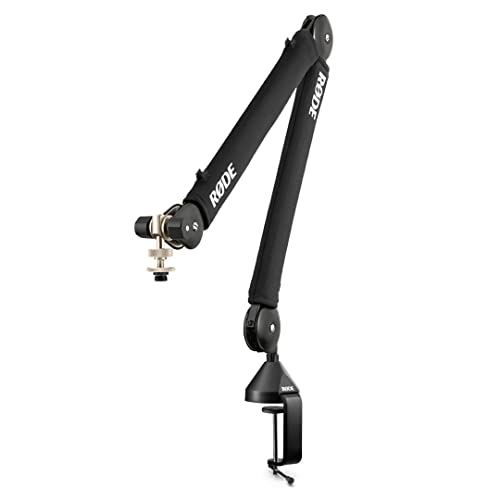
Rode PSA1+ Professional Swivel Mount Studio Arm
The professional broadcast studio arm that handles heavier mics like the Rode PodMic USB without sagging, with full internal cable routing and smooth friction-controlled movement.

Elgato Wave Mic Arm Low Profile
A low-profile boom arm designed to keep the microphone in the lower field of view, out of the webcam frame, with internal cable routing and a desk clamp rated for lighter mics.

InnoGear Heavy Duty Microphone Boom Arm
A budget steel boom arm with dual-spring tension, desk clamp, and 5/8-inch thread. A reliable first boom arm for developers who need positioning without spending $100.
What does not matter much for Whisper accuracy
Frequency response above 8 kHz does not meaningfully affect Whisper accuracy. The model processes a 16 kHz audio file internally, so audio information above 8 kHz is not used in transcription. A $400 condenser with a flat response to 20 kHz produces essentially the same Whisper word-error rate as a $80 dynamic with a gentle high-frequency rolloff at 10 kHz.
Sample rate and bit depth above baseline minimums do not affect Whisper accuracy either. Whisper resamples input audio to 16 kHz internally. Recording at 48 kHz 24-bit versus 16 kHz 16-bit has no effect on the transcription output, because the model converts the input to the same representation before processing.
USB versus XLR connection type, within a quality tier, has minimal effect. The preamp in the Focusrite Scarlett Solo 4th Gen is cleaner than most laptop USB inputs, which can reduce the noise floor slightly in very quiet recording environments. But the improvement is small compared to the effect of cardioid polar pattern and consistent close-mic placement. Buy the interface for monitoring quality and gain control, not because it improves Whisper accuracy dramatically over a good USB microphone.

Focusrite Scarlett Solo 4th Gen
The most popular audio interface for home studios and developer setups, with a clean low-noise preamp, Air mode for voice clarity, USB-C, and class-compliant macOS support without a driver.
Pop filters and shock mounts: do they affect Whisper accuracy?
Pop filters address plosive sounds, the burst of air pressure from P and B consonants that creates a brief spike in the audio waveform. Whisper handles mild plosives reasonably well, but sharp plosive spikes can cause the model to misinterpret a word. An Aokeo Professional Microphone Pop Filter or the Foam Windscreen for Rode NT-USB Mini for the NT-USB Mini reduces these spikes at negligible cost.
Shock mounts address mechanical vibration transmitted through the desk and boom arm into the microphone capsule. This produces low-frequency rumble in the recording that Whisper has to process alongside your voice signal. A mechanical keyboard thudding on a desk surface can introduce noticeable low-frequency content into the recording. The InnoGear Universal Shock Mount or the Rode SM6 Shock Mount with Pop Filter for Rode condensers isolates the capsule from this transmission path.
Neither pop filter nor shock mount is a high-priority purchase for a developer using a dynamic microphone on a boom arm positioned correctly. Both become more relevant with condenser microphones in environments with keyboard vibration.

Aokeo Professional Microphone Pop Filter
A double-layer nylon mesh pop filter on a flexible gooseneck clamp that attaches to any boom arm and blocks plosive breath sounds without muffling high-frequency voice detail.

Foam Windscreen for Rode NT-USB Mini
A foam windscreen cut to fit the Rode NT-USB Mini capsule housing, reducing plosive sounds and minor environmental breeze noise for developers who dictate close to the mic.
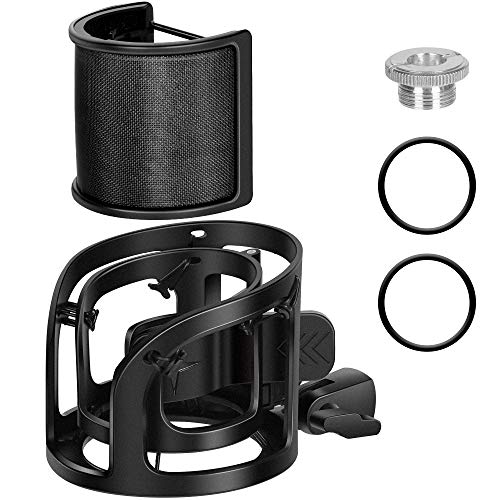
InnoGear Universal Shock Mount
A budget elastic shock mount with a universal 5/8-inch thread adapter that fits most USB microphones and reduces desk vibration noise for a cleaner dictation signal.

Rode SM6 Shock Mount with Pop Filter
Rode's premium shock mount with an integrated pop filter and elastic suspension, designed for Rode condenser microphones. Isolates the capsule from desk vibration transmitted through the boom arm.
Featured in this guide
Rode PodMic USB
A broadcast-grade dynamic mic with both USB-C and XLR outputs, tight cardioid pattern, and a built-in headphone output. The top Whisper and Wispr Flow recommendation in developer communities.
Audio-Technica ATR2100x-USB
A dynamic cardioid mic with both USB-C and XLR outputs, clean preamp, and a warm sound character. A long-running developer favorite for AI dictation on a tight budget.
Rode NT-USB Mini
A compact studio condenser with a tight cardioid pattern, USB-C output, and an integrated pop filter built into the capsule housing. Excellent voice clarity for Whisper and voice-coding workflows.
Rode PSA1+ Professional Swivel Mount Studio Arm
The professional broadcast studio arm that handles heavier mics like the Rode PodMic USB without sagging, with full internal cable routing and smooth friction-controlled movement.
Aokeo Professional Microphone Pop Filter
A double-layer nylon mesh pop filter on a flexible gooseneck clamp that attaches to any boom arm and blocks plosive breath sounds without muffling high-frequency voice detail.
InnoGear Universal Shock Mount
A budget elastic shock mount with a universal 5/8-inch thread adapter that fits most USB microphones and reduces desk vibration noise for a cleaner dictation signal.
FAQ
Frequently asked questions
Which microphone properties most improve Whisper transcription accuracy?+
The two most important properties for Whisper accuracy are polar pattern and signal-to-noise ratio. A cardioid pattern that rejects off-axis room noise keeps the model from processing environmental sound alongside your voice. Close-mic positioning via a boom arm maintains a favorable signal-to-noise ratio. These two factors have more impact on Whisper word-error rate than any other microphone specification.
Does recording in high sample rate improve Whisper accuracy?+
No. Whisper resamples input audio to 16 kHz before processing. Recording at 48 kHz or 96 kHz provides no accuracy benefit because the model converts all input to the same internal representation. Use a 16 kHz or 44.1 kHz sample rate for dictation recordings. The quality that matters for Whisper is the signal-to-noise ratio in the frequency band below 8 kHz, not the sample rate or bit depth.
Does a USB audio interface improve Whisper accuracy over a USB microphone?+
Marginally, in some setups. A clean interface preamp like the Focusrite Scarlett Solo reduces electronic self-noise slightly compared to a laptop USB input, which can improve accuracy very slightly in very quiet recording environments where self-noise is the limiting factor. For most home office setups, the improvement is small compared to the effect of polar pattern and mic placement. Buy the interface for gain control and monitoring quality, not primarily for Whisper accuracy.